From the Silk Road to Koza Han: Bursa Silk Heritage and Weaving History
The final western gateway of the Silk Road: Mulberry trees, silkworm cocoons, 1491 Koza Han caravanserai, and the story of royal Ottoman silk fabrics.
From the Silk Road to Koza Han: Bursa Silk Heritage and Weaving History
The Silk Crossroads of East and West: Bursa
As the primary terminus where camel caravans from China and Persia traded with Venetian, Florentine, and Genoese merchants, Bursa was the beating heart of global silk commerce during the 15th and 16th centuries. Royal Bursa silks adorned palaces across Europe and the Middle East.
1. Koza Han (1491): The Imperial Cocoon Exchange
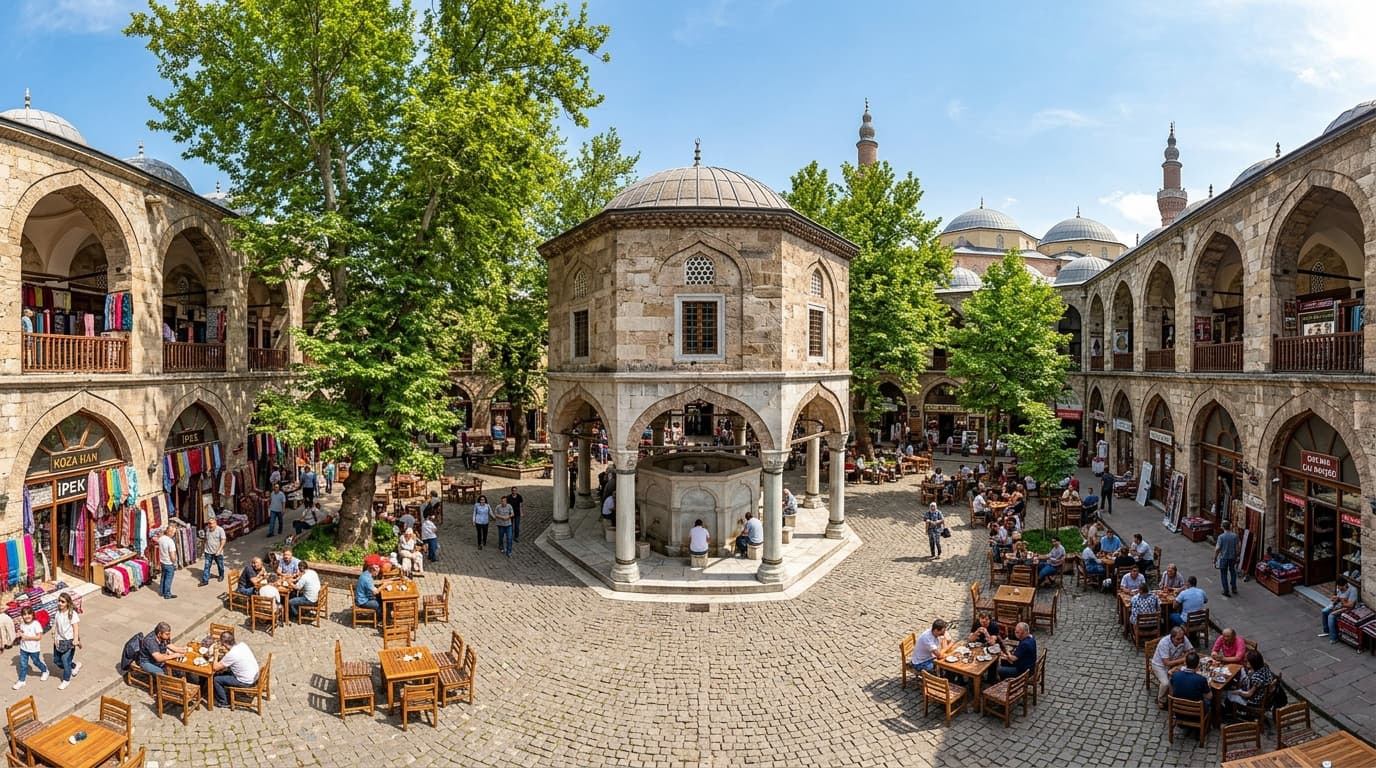
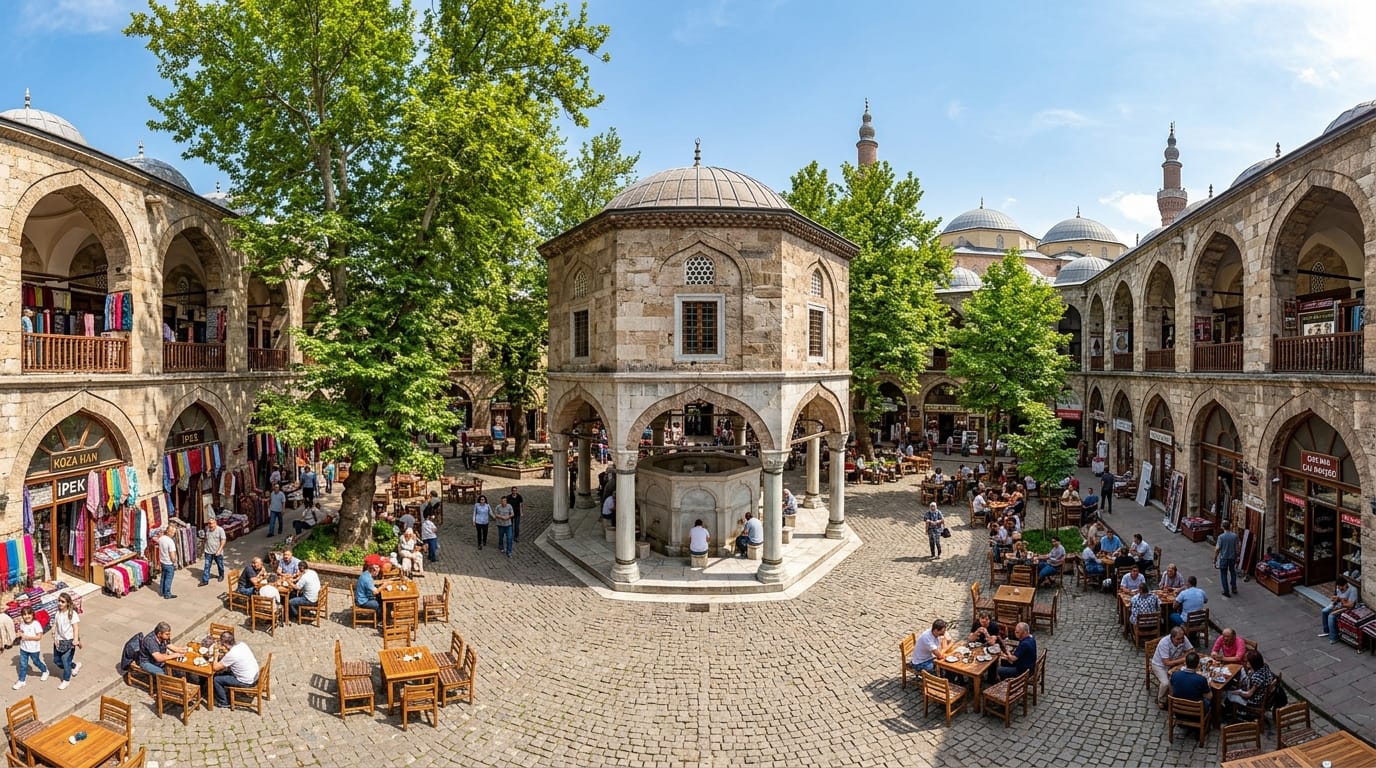
Commissioned by Sultan Bayezid II, Koza Han features a breathtaking two-story stone courtyard centered around an elevated octagonal masjid. For over five centuries, merchants have gathered here to trade raw silk cocoons, scarves, and exquisite handmade fabrics under ancient plane trees.
2. Muradiye Silk Weaving Mill & Fabrika-i Hümayun
Established during the 19th-century industrialization to supply the imperial court, historic silk factories preserved Bursa's centuries-old jacquard weaving traditions.
Dr. Kemal Altın
Tarih & UNESCO Mirası Danışmanı • Tarih Danışmanı & Yazar
Osmanlı'nın ilk başkenti Bursa'nın sultan külliyeleri, hanlar bölgesi ve tarihi mahalleleri üzerine doktora tezine sahip akademisyen ve araştırmacı yazar.
This content has been prepared in compliance with Bursamız Editorial Standards, cross-verified with official city data.