
Historical Koza Han (Silk Bazaar)
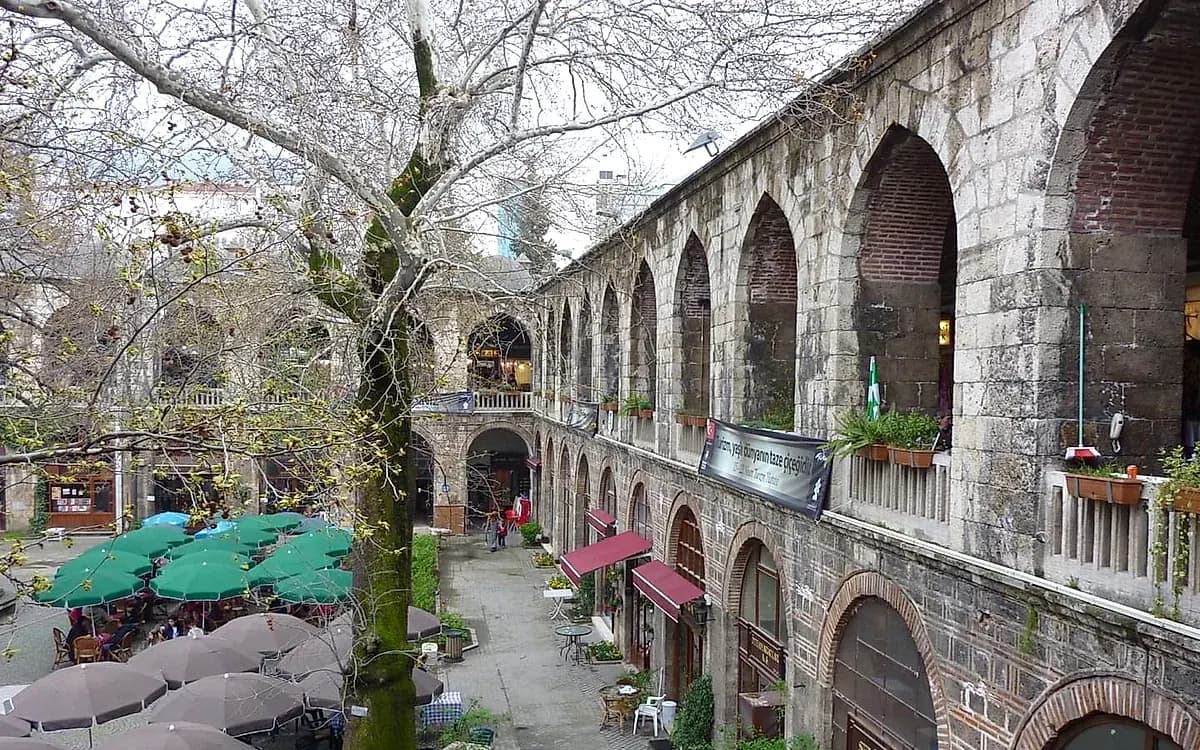
Built in 1491 by Ottoman Sultan Bayezid II, Historical Koza Han is the most magnificent Western terminus of the Silk Road in Anatolia, featuring a peaceful shaded courtyard, an octagonal elevated kiosk mosque on eight marble pillars, and 95 merchant rooms celebrating centuries of Bursa silk heritage.
Historical Koza Han (Silk Bazaar)
1. Essential Facts & Quick Visit Summary
Commissioned in 1491 by Ottoman Sultan Bayezid II and designed by royal architect Abdülula bin Puladşah, Historical Koza Han is the most magnificent Western terminus of the ancient Silk Road in Anatolia and the supreme masterpiece of Ottoman caravanserai architecture.
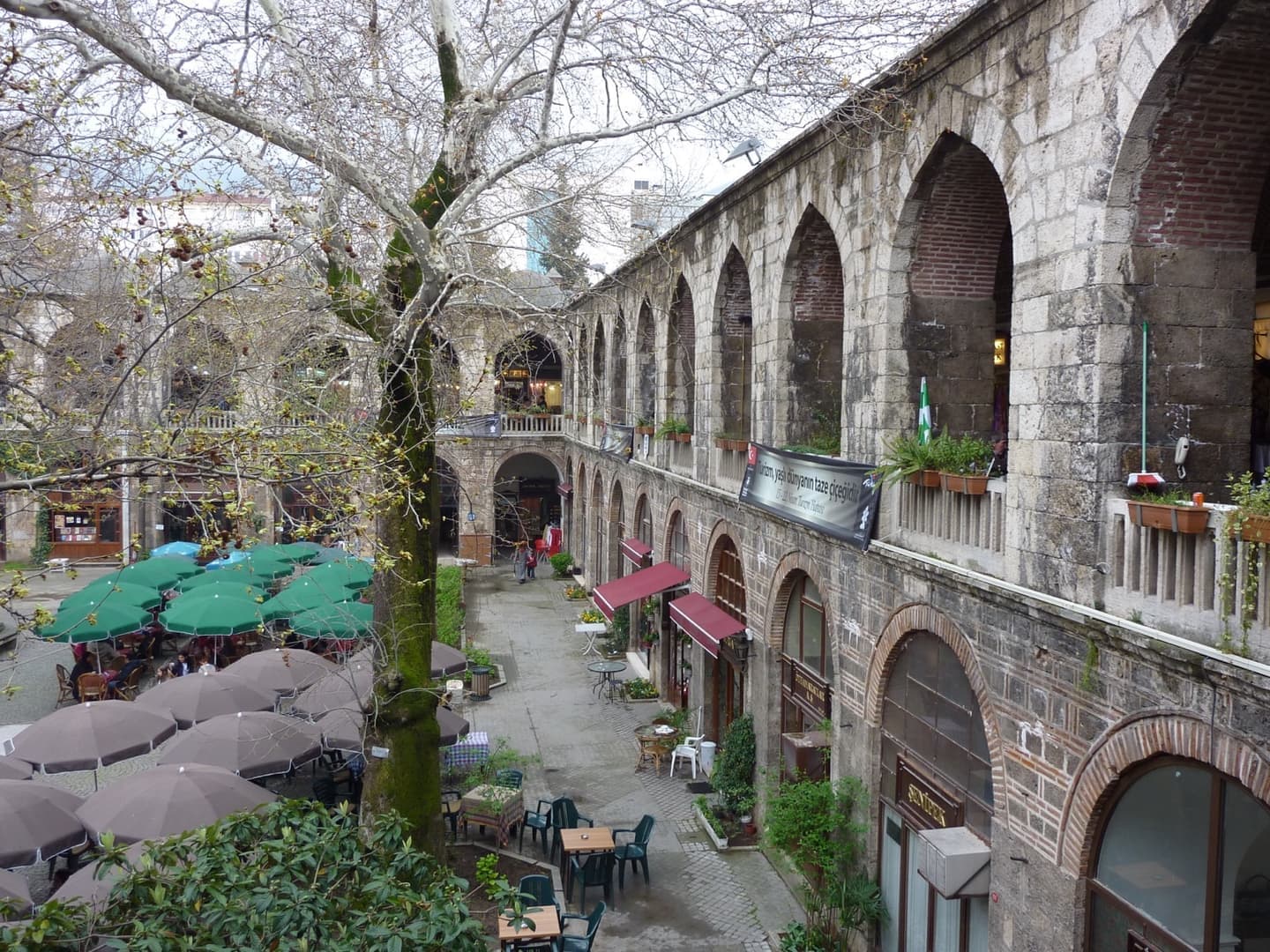
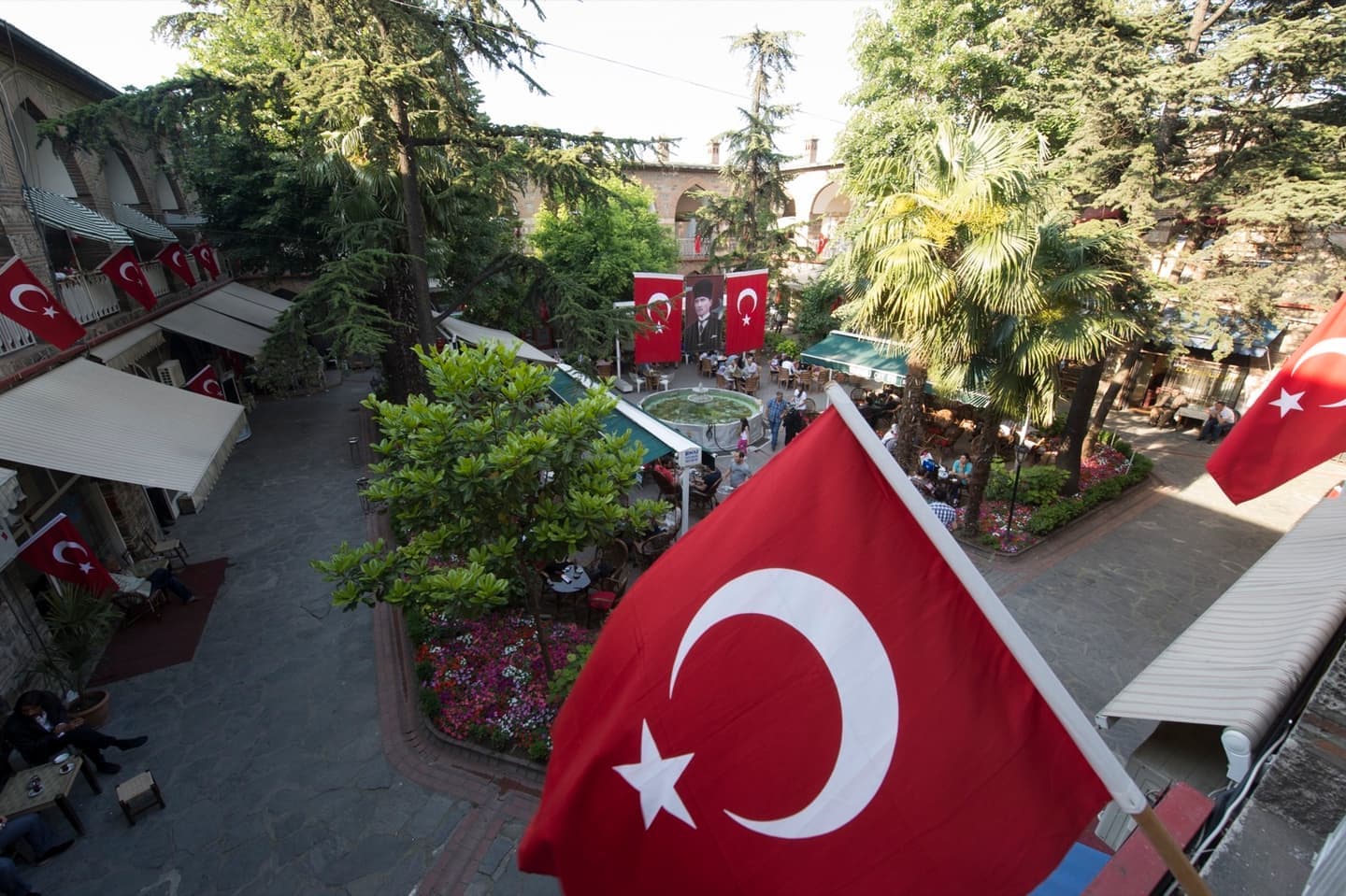
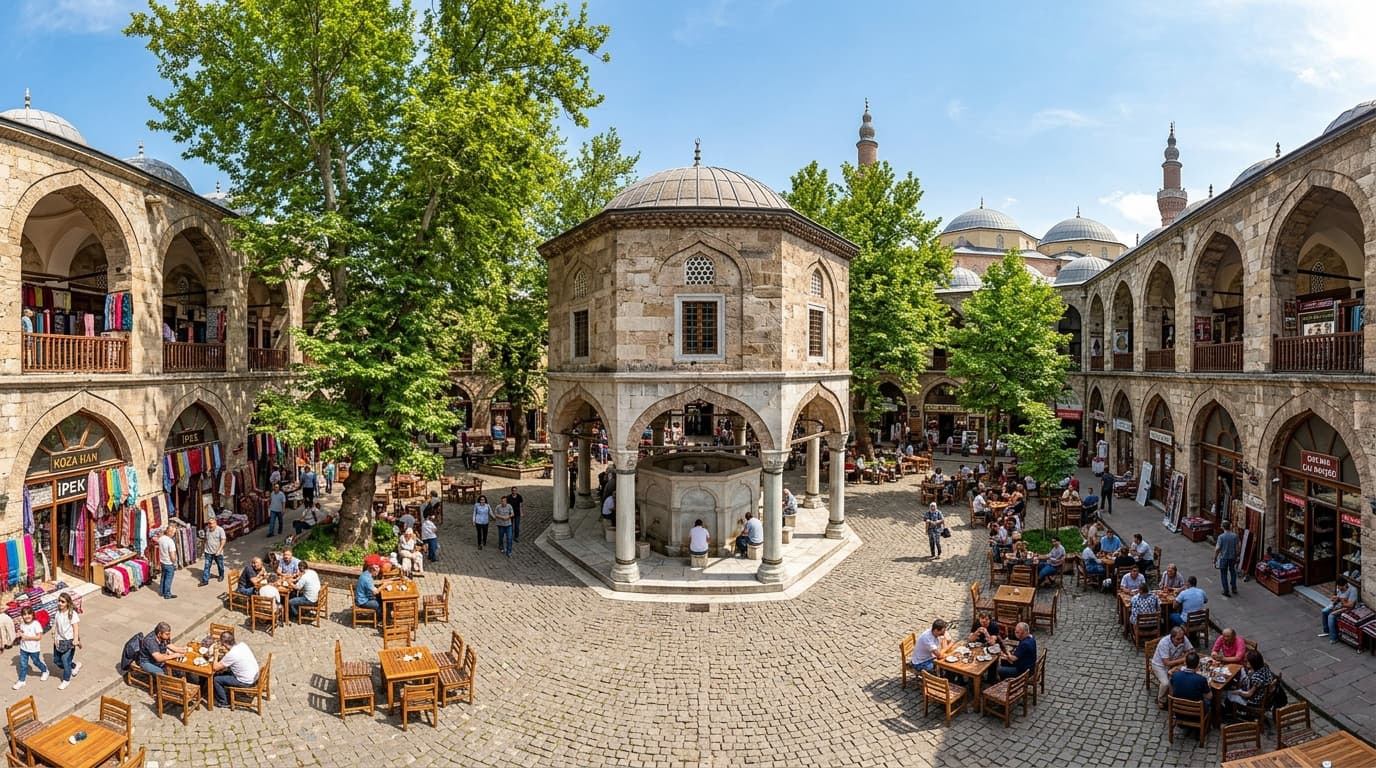
Situated in the historic heart of Osmangazi between the Grand Mosque (Ulu Cami) and the Orhan Gazi Complex, this living UNESCO World Heritage monument enchants travelers with its spacious stone courtyard shaded by centuries-old plane trees, an octagonal elevated kiosk mosque perched on eight marble pillars, and 95 vaulted merchant chambers spanning two arcaded levels. Celebrated for over five centuries as the premier international trading hub for raw silk and cocoons, Koza Han today welcomes global visitors with boutique silk galleries, traditional artisans, and open-air cafés serving ember-roasted Turkish coffee.
Historical Koza Han Quick Reference Guide
- Location & District: Osmangazi / Bursa (Historic Bazaar & Khans District, Uzun Çarşı entrance)
- Patron & Construction Year: Sultan Bayezid II / 1491 (Completed Autumn 1491)
- Chief Architect: Abdülula bin Puladşah / Construction Overseer Ali bin Abdullah
- Layout & Rooms: Double-storey arcaded caravanserai; 45 ground-floor rooms and 50 upper-floor rooms (95 total)
- Central Masterpiece: Octagonal Köşk Masjid elevated on eight stone pillars with marble fountain beneath
- Admission: Free (Public historic commercial bazaar and open-air landmark; no Museum Pass required)
- Best Visiting Hours: Morning 08:30 - 10:30 (Quiet ember coffee) and 10:00 - 13:00 (Silk shopping)
2. History and Foundation: Bayezid II Era and the Silk Road Legacy
The construction of Koza Han stands as an architectural testament to the Ottoman Empire's dominance over global silk trade routes in the late 15th century. Sultan Bayezid II, son of Mehmed the Conqueror, required substantial and permanent endowment revenues (waqf) to maintain the grand mosque, madrasa, and charitable public kitchen he was constructing in Istanbul. To generate sustainable wealth, he ordered the construction of a monumental commercial caravanserai in Bursa, the unquestioned capital of the international silk trade.
Recorded in early endowment deeds as "Han-ı Cedid" (The New Han), "Han-ı Cedid-i Evvel", or "İpek Hanı" (The Silk Han), groundbreaking occurred in March 1491. Under the master design of imperial architect Abdülula bin Puladşah, the monumental complex was completed in the autumn of the same year with extraordinary speed. From its opening days, Koza Han became the bustling headquarters for international merchants hailing from Venice, Genoa, Florence, Persia, and Damascus.
Farmers from the mountain villages of Bursa brought tons of freshly harvested silkworm cocoons directly into this courtyard. They were weighed on official imperial scales and auctioned off to local and foreign textile masters. The immense customs and rental revenues gathered here successfully funded charitable soup kitchens in Istanbul for centuries, embodying the profound social purpose of Ottoman architecture.
3. Architectural Plan and Engineering: Two-Storey Caravanserai Design
Koza Han represents the classical zenith of Ottoman caravanserai engineering in terms of proportion, symmetry, and materials. Built on a rectangular layout oriented east-west, it encloses a central paved courtyard measuring approximately 45.90 by 37.50 meters.
The walls feature the signature Ottoman **alternating masonry (almaşık örgü)** technique, layering two courses of finely dressed ashlar limestone with two or three courses of horizontal red brick. This construction technique provided structural elasticity that successfully dissipated destructive seismic shockwaves across six centuries of earthquakes.
The caravanserai is divided into two distinct functional levels:
- Ground Floor (45 Chambers): Barrel-vaulted chambers opening directly onto the stone courtyard. Historically, these rooms served as stables for pack animals (horses, mules, camels), wholesale storage warehouses, and secure deposit vaults.
- Upper Floor (50 Chambers): Accessible via stone flights of stairs. The upper chambers open onto an exquisite vaulted gallery supported by brick arches and marble pillars. These rooms featured fireplaces and outward-facing windows, serving as merchant sleeping quarters, trading offices, and negotiation rooms.
4. The Courtyard Fountain and Elevated Köşk Masjid
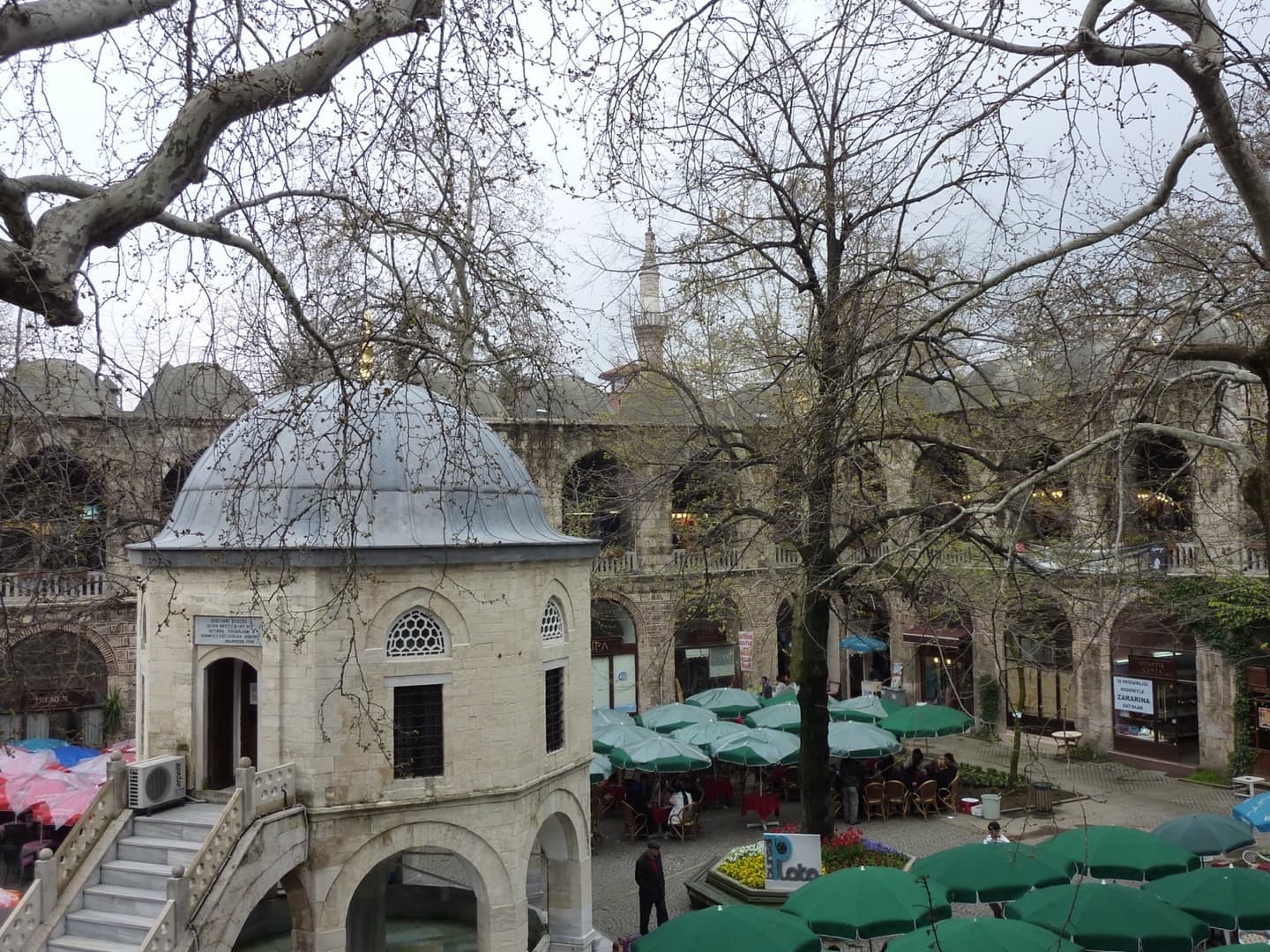
In the exact center of Koza Han's tranquil courtyard stands an architectural gem rarely seen in Ottoman caravanserais: the independent, two-tier **Köşk Masjid and Ablution Fountain**.
While caravanserais traditionally placed prayer rooms over the entrance gate, Koza Han positioned its mosque in the center of the courtyard. This allowed traveling merchants to worship while keeping a watchful eye on their valuable silk merchandise below:
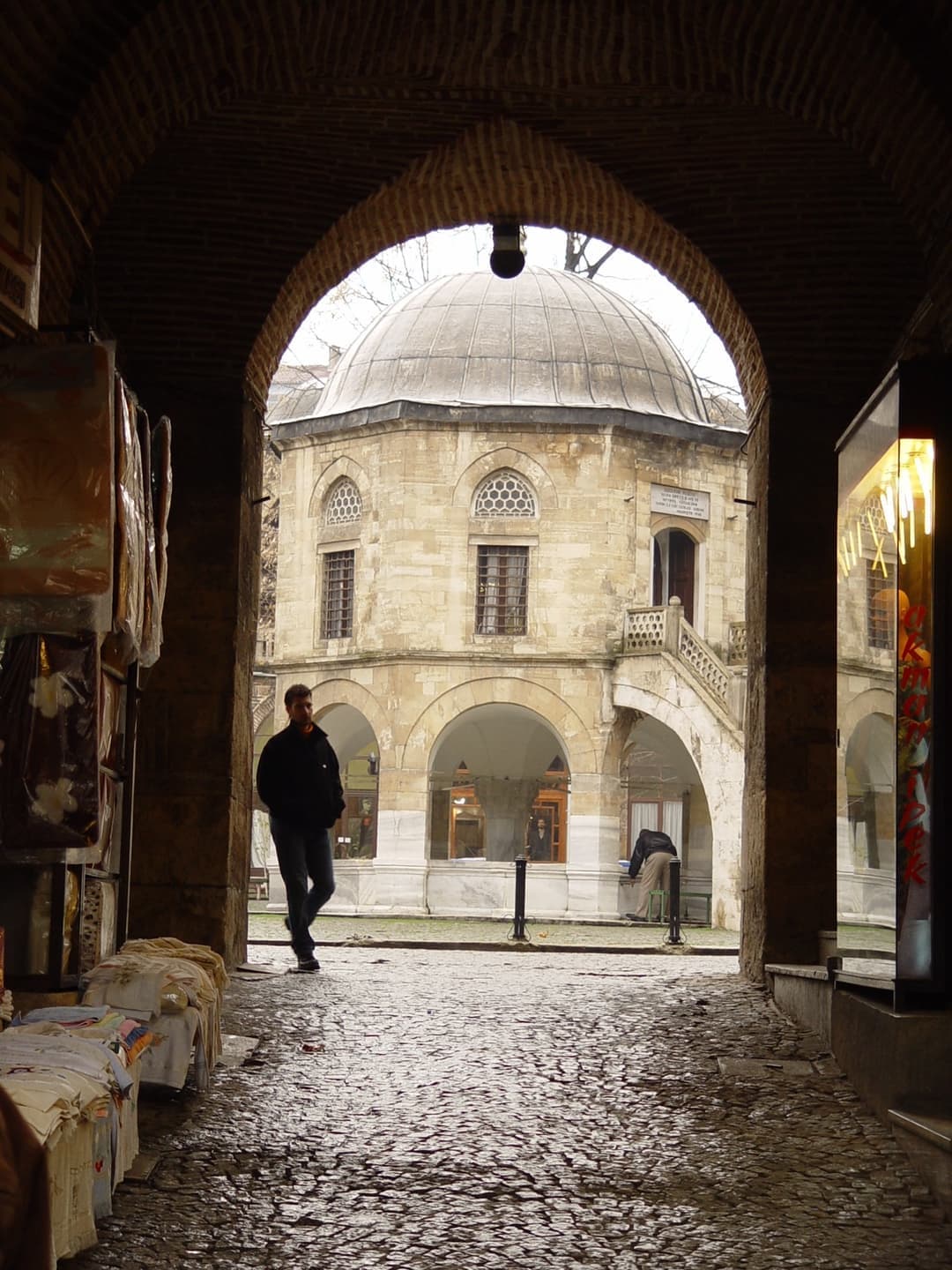
On the ground level, an octagonal white marble basin features bronze taps supplying fresh spring water for ablutions. Encircling this fountain are **eight thick stone piers** joined by wide pointed arches that elevate the octagonal prayer chapel above. A graceful double flight of marble stairs on the northern facade leads worshippers up into the chapel.
The lead-covered dome incorporates inverted terracotta jars in its masonry corners to optimize sound resonance. The continuous splashing of the fountain below functions as a natural acoustic buffer, masking the busy market chatter and creating an aura of serenity inside the chapel.
5. The Silk Commerce, Cocoon Auctions and Living Heritage
Bursa inherited ancient sericulture traditions from Roman and Byzantine eras, elevating silk production to global acclaim under the Ottomans. As Silk Road caravans unloaded raw silk in Bursa, the city became the primary silk supplier to European royal courts.
For centuries, Koza Han buzzed with immense activity during June and July. Mountain villagers transported giant burlap sacks filled with white and yellow silkworm cocoons into the courtyard. Imperial inspectors weighed the cocoons, and loud public auctions (koza mezatı) distributed them to local silk-reeling filatures and European traders.
While modern industrial manufacturing has relocated to specialized cooperatives, Koza Han preserves this heritage through high-end retail craftsmanship. The 50 rooms of the upper gallery house over 40 prestigious boutiques offering authentic hand-woven Bursa silk scarves, pashminas, ties, and brocades.
6. Historic Events, Queen Elizabeth II's Visit and Cultural Memory
Over its 500-year history, Koza Han has welcomed emperors, ambassadors, and literary figures. In modern times, its most celebrated international event took place on **May 15, 2008, when Queen Elizabeth II of the United Kingdom and Prince Philip visited Koza Han** during their official state visit to Turkey.
Her Majesty entered through the grand northern portal, walked beneath the plane trees, and ascended to the upper silk loggia. She observed traditional Bursa silk weaving demonstrations on handlooms, purchased silk scarves and fabric from local artisans, and enjoyed Turkish tea in the open gallery. This royal visit cemented Koza Han's reputation as a globally recognized heritage destination.
7. Earthquakes, Fires and Conservation Milestones
Koza Han has weathered Bursa's greatest urban cataclysms:
- The 1855 Great Bursa Earthquake: The disaster collapsed several upper arcades and damaged the Köşk Masjid. Prompt restoration was commissioned under Sultan Abdülaziz by the Ministry of Foundations.
- The 1958 Grand Bazaar Conflagration: While wooden markets surrounding the han were consumed by fire, Koza Han's thick stone walls and brick vaults prevented total destruction, preserving its core masonry intact.
- UNESCO World Heritage Preservation: Extensively restored in the 1970s, Koza Han was inscribed on the UNESCO World Heritage List in 2014 under "Bursa and Cumalıkızık: The Birth of the Ottoman Empire", ensuring rigorous ongoing conservation.
8. Visitor Planning Guide: Who & When to Visit
To maximize your experience, here are tailored recommendations:
- Silk & Souvenir Shoppers: The upper gallery shops open fully around 10:00 AM. For peaceful browsing and personal service, visit on **weekdays between 10:30 AM and 1:00 PM**. Bargaining is customary for multi-item purchases.
- Coffee & Atmosphere Lovers: Relaxing beneath the ancient plane trees with an ember-roasted Turkish coffee is an unforgettable ritual. The courtyard is quietest between 08:30 AM and 10:30 AM.
- Photographers: The most iconic photographic perspective is captured from the eastern upper gallery, framing the Köşk Masjid and ancient plane trees in a single shot. Morning light (09:00 - 11:00 AM) casts soft, balanced shadows.
- Accessibility: The ground courtyard is flat and easily navigated with wheelchairs or strollers via stone entrance ramps. Access to the upper gallery is via steep historic stone steps.
9. Visitor Guidelines, Silk Authentication and Photography Etiquette
- Admission Policy: Entry to the courtyard and shops is **free of charge**, open seven days a week.
- Authentic Silk Verification: Always inquire if fabrics are 100% pure silk (saf ipek). Genuine Bursa silk glides smoothly, warms immediately against the skin, and displays a subtle natural luster rather than an artificial synthetic shine.
- Photography & Drones: Handheld photography is welcome. Unauthorized drone flights are strictly prohibited across the historic bazaar quarter for safety and heritage regulations.
10. Transportation, Neighborhood Itineraries and Culinary Breaks
Koza Han is conveniently situated in the central Osmangazi district:
- By Public Transit: Take the BursaRay metro to Şehreküstü Station and follow the Covered Bazaar exit for an easy 5-minute walk. Alternatively, take the T1 Nostalgic Tram directly to the 'Ulu Cami' stop, just 2 minutes away.
- Parking: Park at Zafer Plaza Multi-Storey Car Park (400 m) or Cemal Nadir Street Car Park (300 m).
- Recommended Integrated Itinerary: Exit Koza Han's southern gate to arrive at Bursa Grand Mosque (Ulu Cami) in just 1 minute. Next, step out through the northern portal into the historic corridors of the Bursa Covered Bazaar. Complete your cultural excursion with a savory meal of Bursa Pideli Köfte and taste renowned Bursa Candied Chestnuts, following our Historical Bazaar and Khans Route guide.
Insider Tip
"Visit between 08:30 and 10:00 AM for ember-roasted morning coffee beneath the ancient plane trees before crowds arrive. Head to the eastern upper gallery for the iconic photo angle capturing the elevated Köşk Masjid."
Bursamız Local Guide Notes
Google E-E-A-T Verified Visitor Experience & Insights
Dr. Kemal Altın
Tarih & UNESCO Mirası Danışmanı • Tarih Danışmanı & Yazar
Osmanlı'nın ilk başkenti Bursa'nın sultan külliyeleri, hanlar bölgesi ve tarihi mahalleleri üzerine doktora tezine sahip akademisyen ve araştırmacı yazar.
This content has been prepared in compliance with Bursamız Editorial Standards, cross-verified with official city data.
Photo Gallery
Historical Koza Han (Silk Bazaar) 360° Virtual Tour & Earth 3D Station
Satellite 3D telemetry, terrain topography, and 360° street panoramas are fully calibrated. Fly in 3D orbit or tour inside step by step.
Add to Your Route & Stamp in Culture Passport
Plan and optimize your Bursa trip on the interactive map; check in on-site via GPS to collect digital stamps and earn the official Bursa City Ambassador award.
Frequently Asked Questions (FAQ)
Is there an admission fee for historic Koza Han and is Museum Pass accepted?
No, entrance to historic Koza Han is completely free. As a vibrant, living part of Bursa's UNESCO World Heritage Bazaar and Khans Area, it is a public historic marketplace and open-air cultural landmark, requiring no ticket or Museum Pass.
What are the visiting and shop opening hours of Koza Han?
The central courtyard and tea gardens are open daily from 08:00 to 20:30. The silk boutiques and artisan shops on the upper gallery operate at full capacity Monday through Saturday from 09:00 to 19:30, and on Sundays generally from 10:30 to 18:30.
Is the Köşk Masjid in the center of the courtyard open for worship?
Yes, the historic Köşk Masjid, elevated on eight octagonal marble pillars in the center of the courtyard, is an active house of prayer. Visitors can ascend the stone stairs to appreciate its minimalist Ottoman stone craftsmanship outside prayer times, while the marble fountain beneath serves worshippers for ritual ablutions.
Is the silk sold at Koza Han authentic Bursa silk, and how can one distinguish real silk?
Koza Han's upper loggia houses multi-generational merchants specializing in certified 100% pure Bursa silk scarves, shawls, and fabrics. To verify genuine silk, you may request a small thread burn test: real silk burns with an aroma like singed human hair and crumbles into fragile dark ash, whereas synthetic polyester melts into a hard plastic bead. Furthermore, genuine Bursa silk warms instantly against the touch and exhibits a soft, pearlescent luster.
Who built historic Koza Han, in what year, and for what purpose?
Koza Han was commissioned in 1491 by Ottoman Sultan Bayezid II. Designed by royal architect Abdülula bin Puladşah and built by civil overseer Ali bin Abdullah, it was constructed to generate endowment revenue (waqf) for the Sultan Bayezid II Mosque complex in Istanbul and to serve as the international trading hub for caravans arriving via the Silk Road.
What is the architectural uniqueness of the elevated Köşk Masjid in the courtyard?
It represents a rare two-tier architectural layout in Ottoman caravanserai design. The ground floor consists of an eight-sided marble basin and fountain spouts, enveloped by eight massive stone piers and arches that support an octagonal prayer chapel above. Reached via a graceful marble flight of stairs on the north side, the chapel features acoustic earthenware jars embedded beneath its lead-clad dome.
When did Queen Elizabeth II visit Koza Han and what did she do?
Queen Elizabeth II of the United Kingdom and Prince Philip visited Bursa Koza Han on May 15, 2008, during their state visit to Turkey. The Queen strolled along the upper gallery, inspected traditional silk-weaving looms, purchased authentic Bursa silk scarves and fabrics, and savored traditional Turkish tea in the upper loggia.
Are silkworm cocoon auctions still held at Koza Han today?
In previous centuries, tons of fresh silkworm cocoons brought from surrounding villages were weighed and auctioned in this courtyard every June and July. Today, commercial wholesale operations have relocated to modern industrial cooperatives (Bursa İpekbirlik); however, nostalgic and symbolic cocoon auction re-enactments are staged each summer during the Bursa Silk Festival.
Where can one enjoy ember-roasted Turkish coffee in Koza Han and what makes it special?
Ember-roasted Turkish coffee is served at the charming open-air café gardens situated beneath centuries-old plane trees in the courtyard. Slowly brewed in traditional copper pots over oak charcoal embers, the coffee is celebrated for its thick velvety crema and deep aroma, traditionally accompanied by Bursa candied chestnuts.
How do I reach Koza Han by car and where is the closest parking facility?
Koza Han is located between Atatürk Avenue and the Covered Bazaar in Osmangazi. Because the surrounding bazaar district is pedestrianized, vehicles cannot drive directly to the gates. You can park at Zafer Plaza Multi-Storey Car Park (400 m), Cemal Nadir Street Car Park (300 m), or Orhangazi Car Park (250 m), all just 3-4 minutes away on foot.
How can I reach Koza Han via BursaRay metro and public transit?
Take BursaRay metro line 1 or 2 and alight at Şehreküstü Station. Take the Covered Bazaar / Khans District exit and take an easy 5-minute stroll along the historic stone avenue to Koza Han's north portal. Alternatively, any central bus heading to Heykel or the T1 Nostalgic Tram stopping at 'Ulu Cami' drops you within a 2-minute walk.
Is Koza Han accessible for wheelchair users and strollers?
The spacious stone-paved courtyard, café gardens, and fountain ground area are flat and wheelchair/stroller accessible via stone ramps at the main gates. However, access to the upper silk shops and the Köşk Masjid is via steep historic stone staircases without elevator access.
How many rooms and portals does Koza Han possess?
Koza Han encompasses 95 rooms in total: 45 vaulted rooms on the ground level (historically utilized for stables, animal pack storage, and wholesale goods) and 50 domed rooms on the upper gallery (used for merchant lodging and retail trade). It also features an adjacent 51-room inner courtyard (İç Koza Han), and four monumental portals opening in four directions.
How do you walk from Koza Han to Bursa Grand Mosque and the Covered Bazaar?
Exiting through Koza Han's south portal places you directly in the courtyard of Bursa Grand Mosque (Ulu Cami), just a 1-minute walk away. Exiting through the grand northern portal leads you immediately onto Uzun Çarşı and the central thoroughfare of the Covered Bazaar.
What are the most pleasant and peaceful hours to visit Koza Han?
The morning hours between 08:30 and 10:30 offer the most serene atmosphere, with gentle birdsong, trickling fountain waters, and dappled shade beneath ancient plane trees. It is the perfect time for ember-roasted morning coffee before the shops open fully at 10:00 for unhurried silk shopping.
Visitor Information
Explore Osmangazi & Surroundings
Gastronomy, district guides, and latest regional highlights in Osmangazi.
Osmangazi Travel Guide: The Heart of History, Inns and Sultan Complexes
Discover Osmangazi, the historical backbone of Bursa, the first capital of the Ottoman Empire, step by step: A complete travel guide from the Ulu Mosque to the Khans District, from the slopes of Tophane to the Muradiye Social Complex.
Registered Gastronomy in Osmangazi
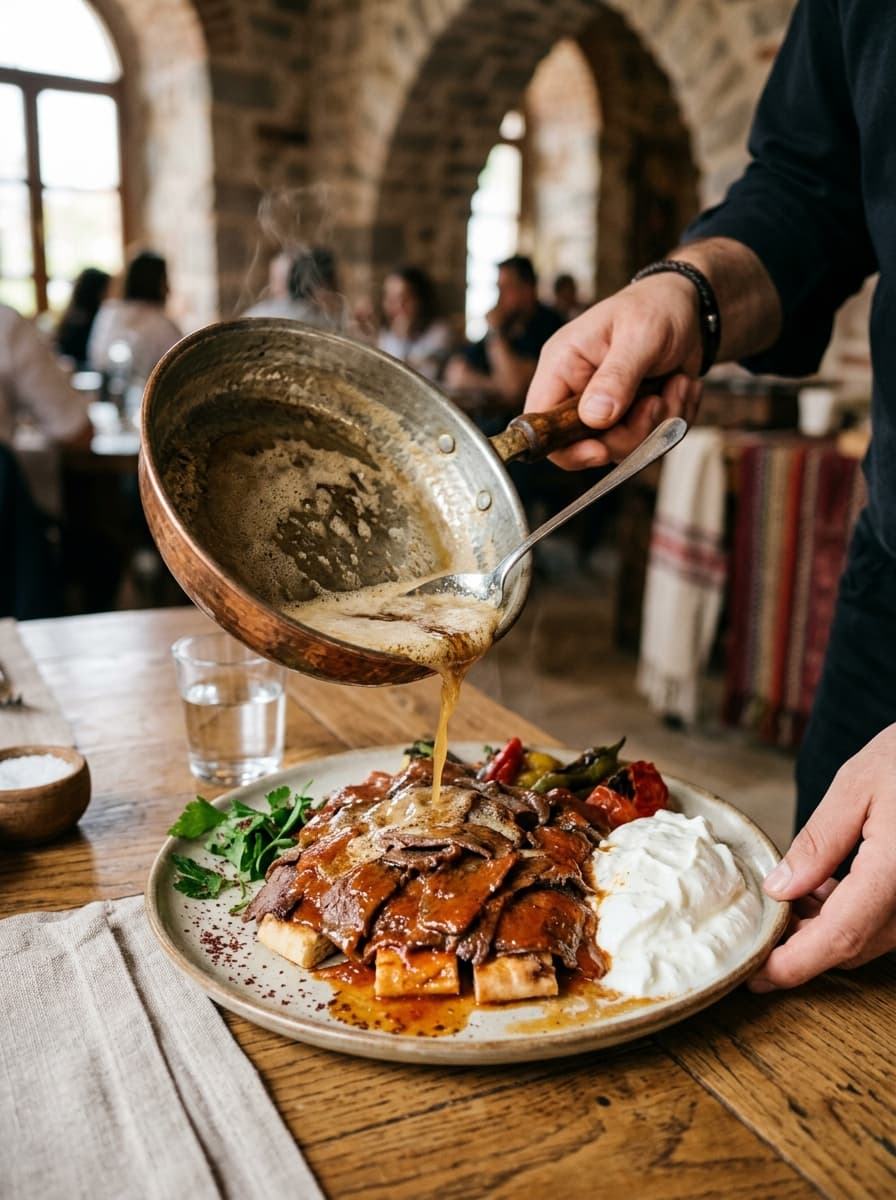
Authentic Bursa Iskender Kebab
Kebapçı İskender (Historic Blue Shop, Heykel), Kebapçı Hüseyin (Alacahırka), Kebapçı İsmail (Kayhan)
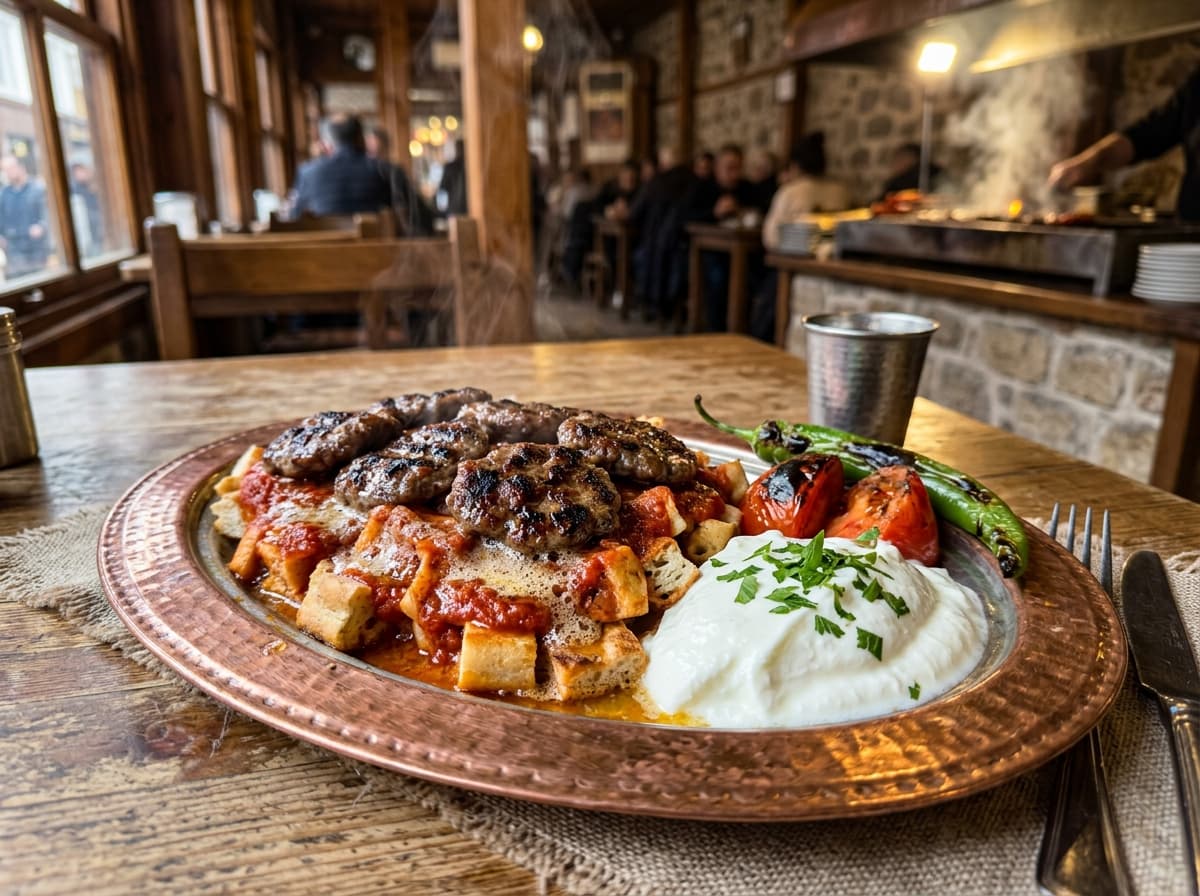
Bursa Meatballs on Flatbread (Pideli Köfte)
Historic Kayhan Bazaar (Hacı Bey, Köfteci Yeşil, İdris)
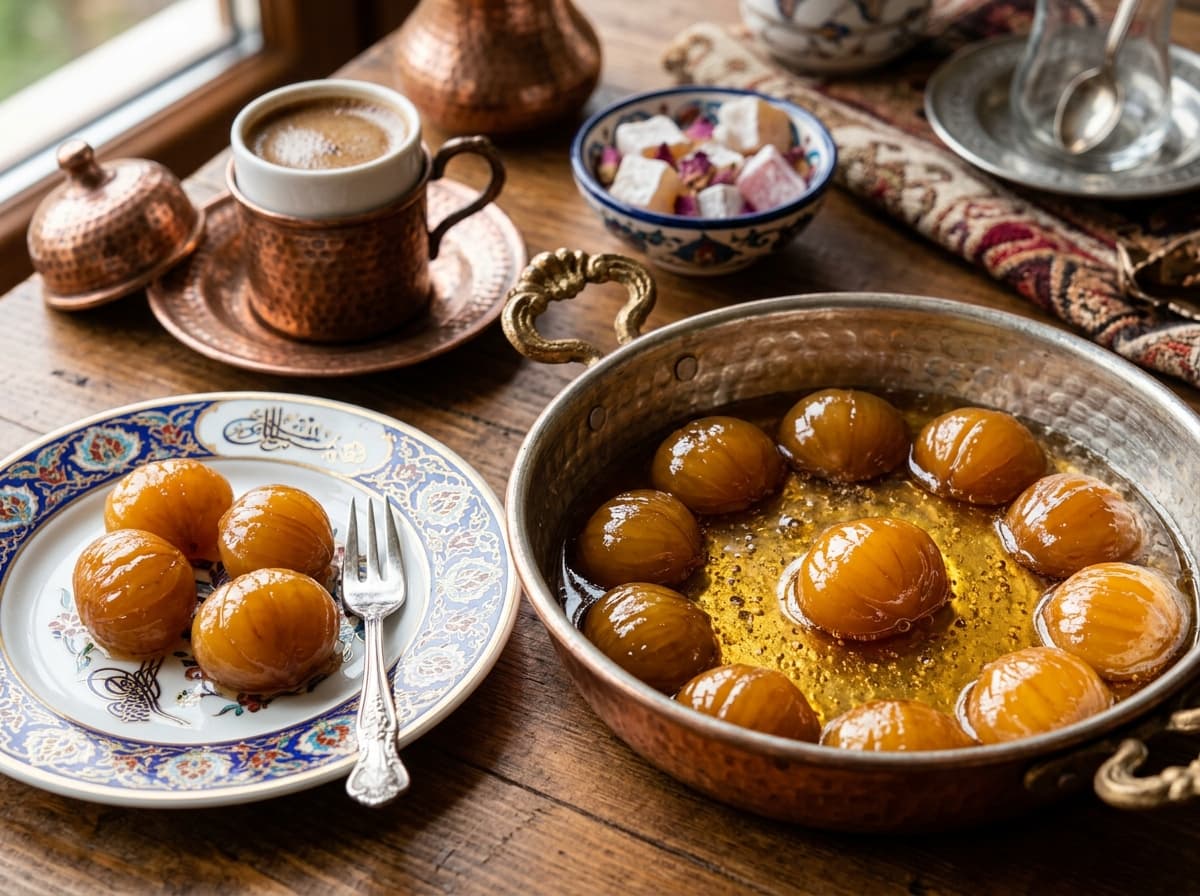
Bursa Candied Chestnuts (Marron Glacé)
Kafkas (Atatürk Cad.), Kardelen Kestane Şekeri, Ali Uzun (Grand Bazaar)
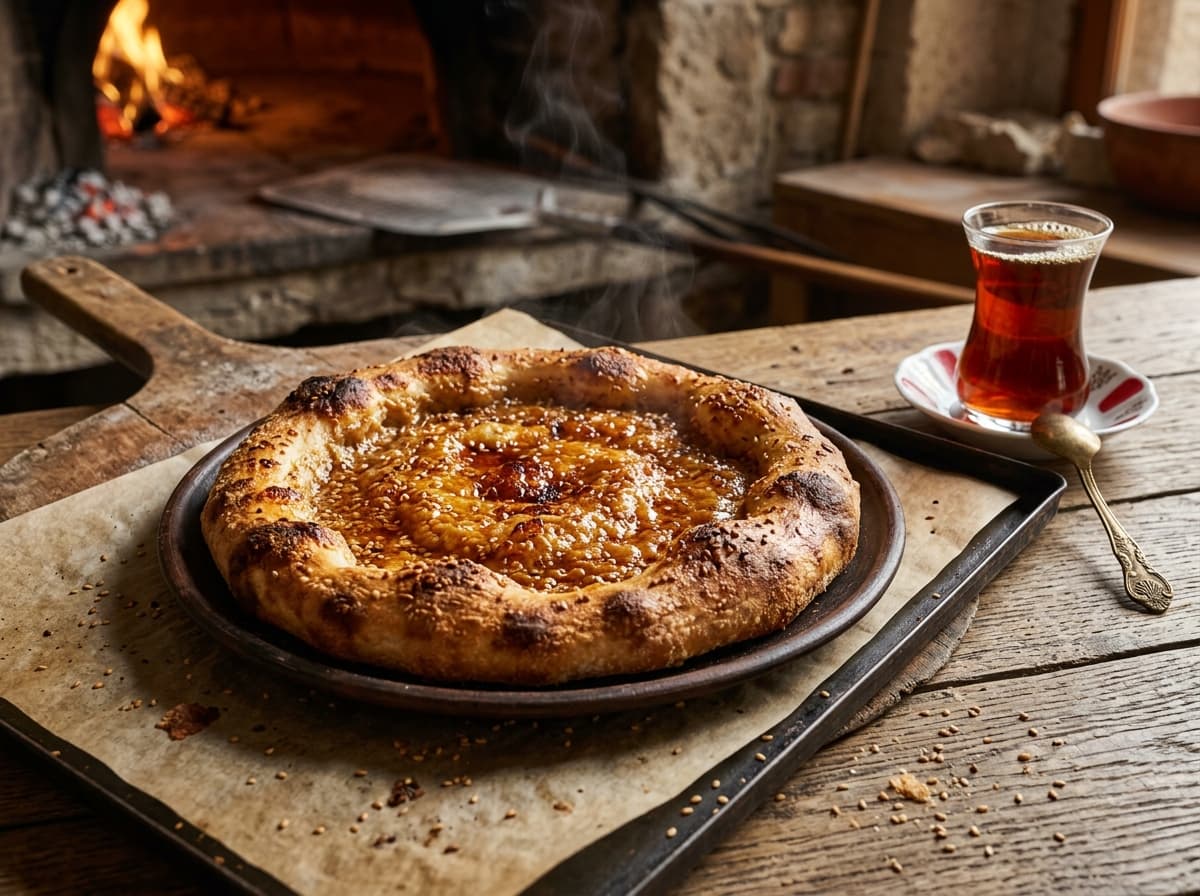
Bursa Tahini Flatbread ('Tahanlı')
Tarihi Abdal Fırını (Abdal Square), İnanç Fırını (Muradiye)

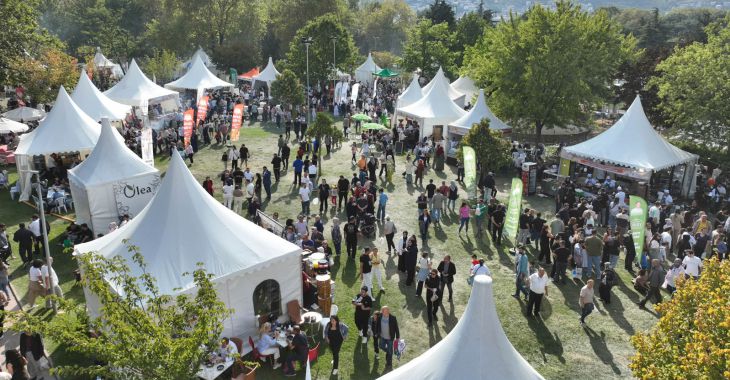

Historical Koza Han (Silk Bazaar)
Visitor Information
What to Do in 2 Hours Around Historical Koza Han (Silk Bazaar)
A curated step-by-step pedestrian itinerary to explore the historic neighborhood effortlessly.
Historical Koza Han (Silk Bazaar)
40 min visit, architectural highlights and photo stop
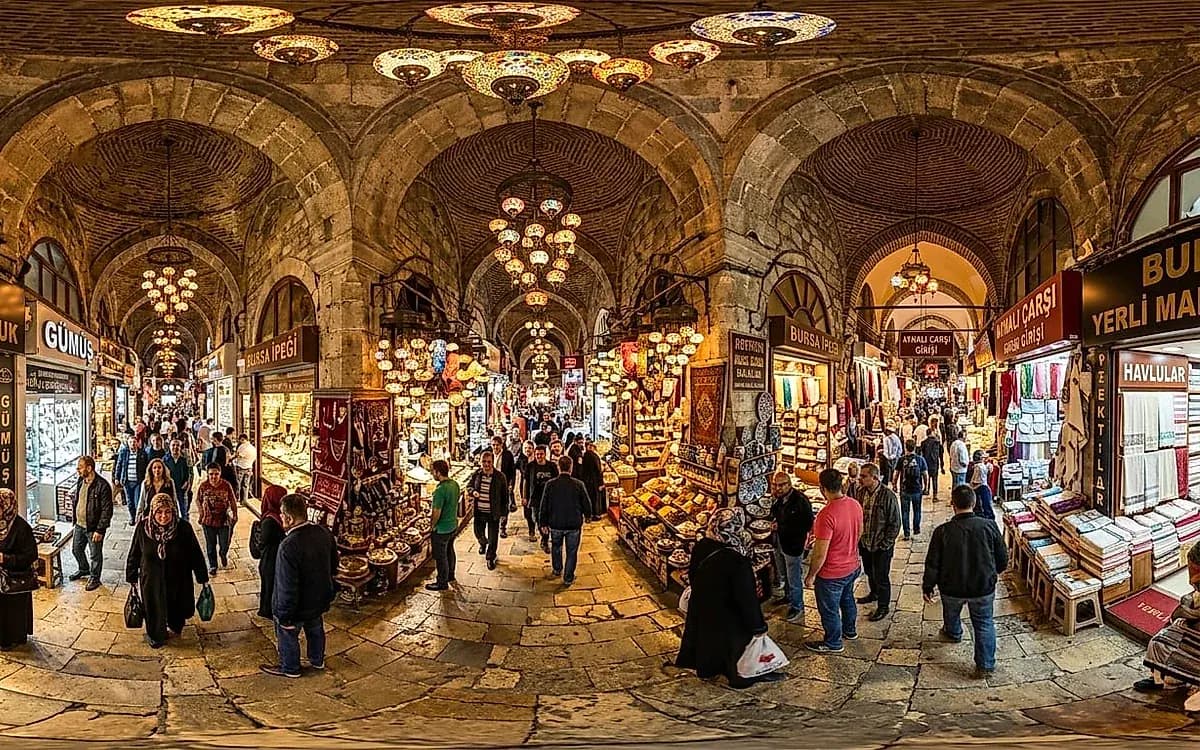
Historical Bursa Grand Bazaar & Bedesten
Originating in 1335 under Orhan Gazi and anchored around Sultan Bayezid I's monumental 14-domed stone Bedesten (1399-1400), Bursa Grand Bazaar is the first organized covered marketplace in Ottoman history, famous for goldsmiths, Aynalı Çarşı silver, and luxury towels.
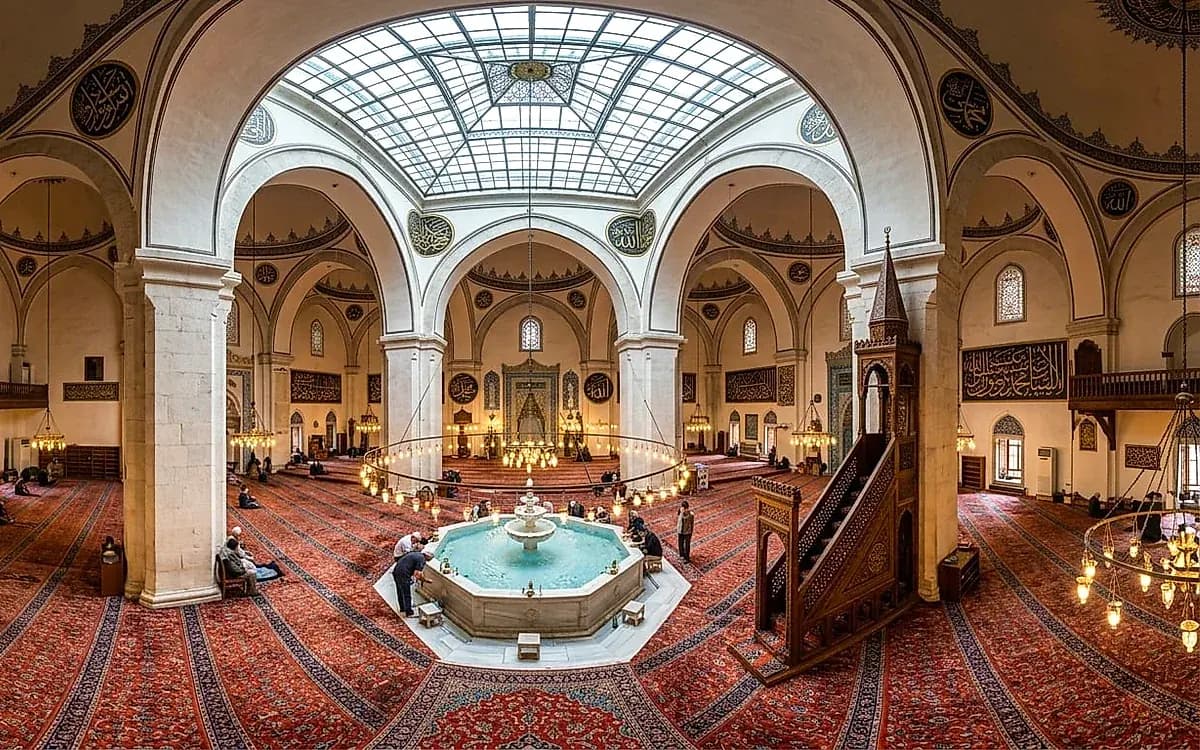
Bursa Grand Mosque (Ulu Cami)
Commissioned in 1399 by Ottoman Sultan Bayezid I following the Battle of Nicopolis, the Grand Mosque of Bursa (Ulu Cami) is the pinnacle of multi-domed hypostyle Ottoman architecture, featuring 20 monumental domes, an indoor marble fountain under an open skylight, an interlocking nail-less walnut minbar depicting the Solar System, and 192 magnificent calligraphic murals.
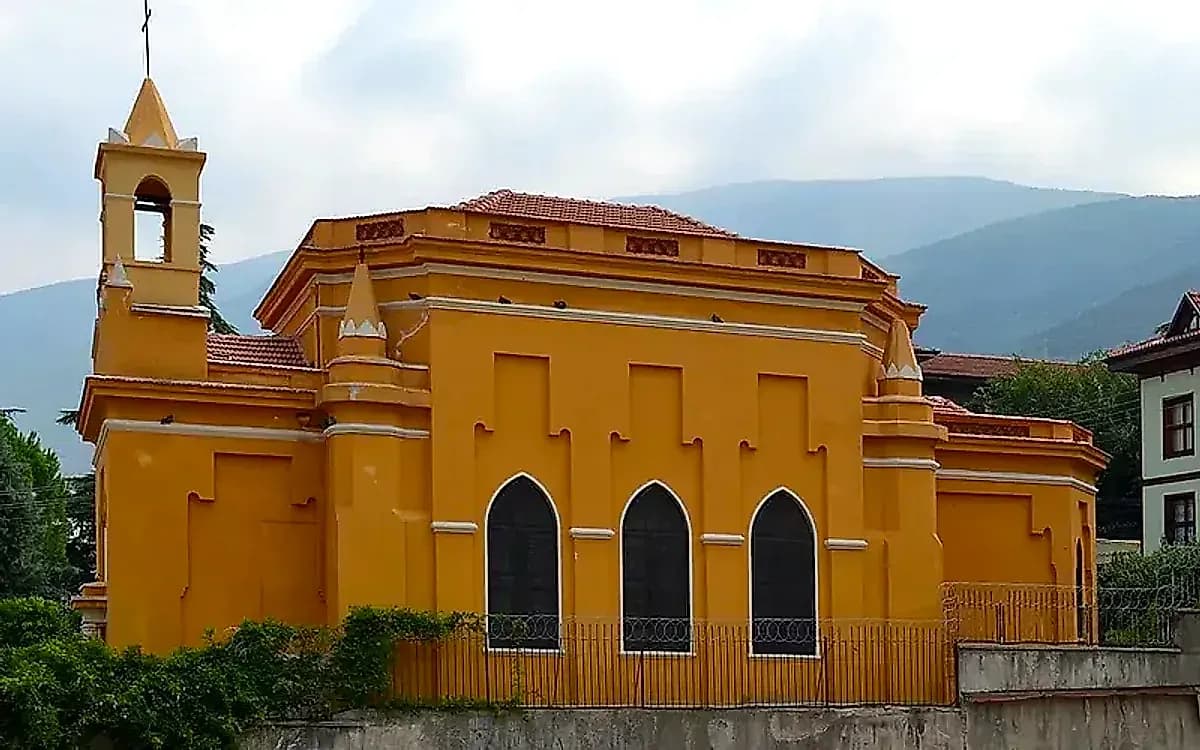
French Protestant Church
Located in Osmangazi, Fransız Protestan Kilisesi represents Bursa's heritage of tolerance and multicultural architectural beauty.
Authentic Bursa Iskender Kebab
Savor traditional Authentic Bursa Iskender Kebab or authentic Turkish coffee in a historic courtyard (20 min).
Other Recommended Attractions in and around Osmangazi
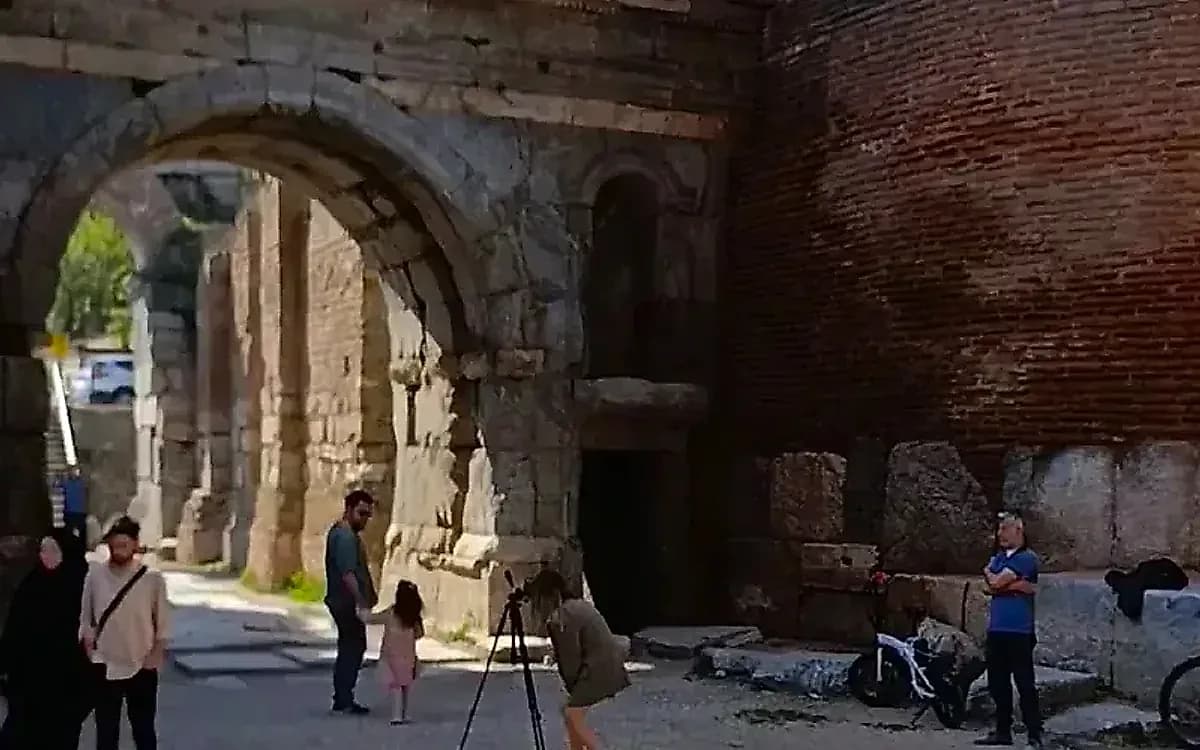
Greece - Turkey Friendship and Peace Tree
A meaningful living monument in Bursa symbolizing eternal friendship and peace between Turkish and Greek nations. Located in Osmangazi, it reflects the city's rich heritage of tolerance and cultural dialogue.
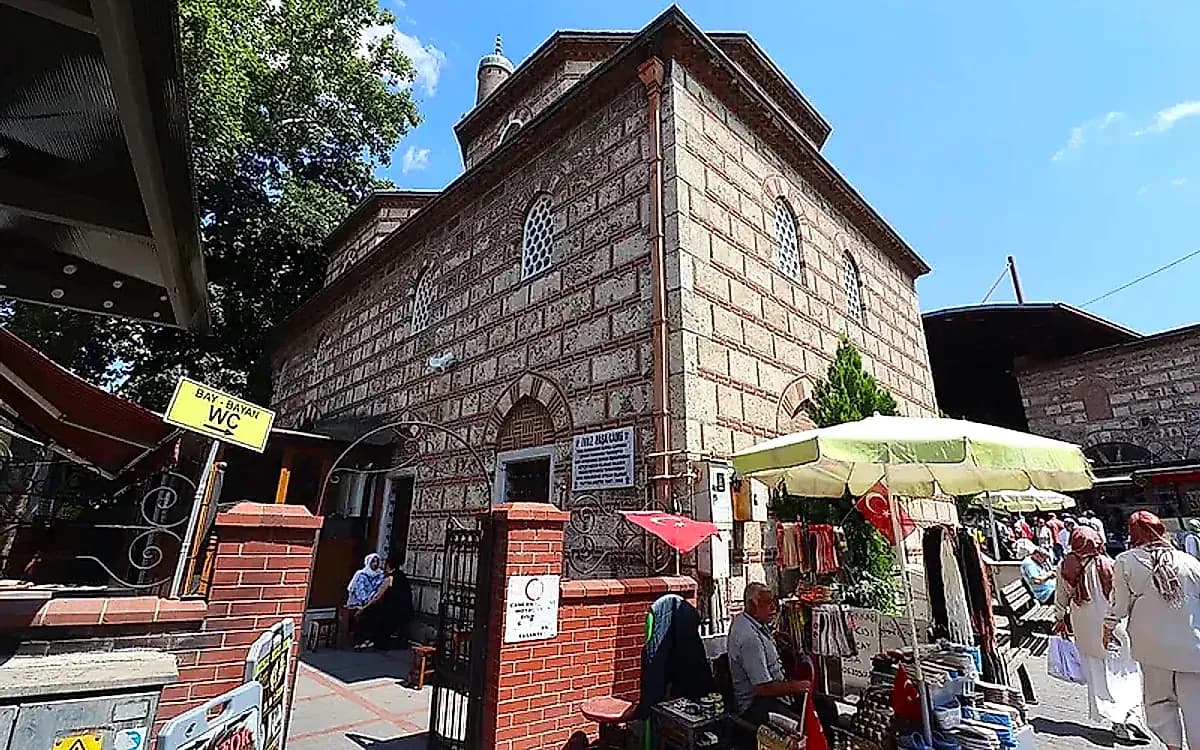
Ahmet Vefik Pasha Hospital (Muradiye Memleket Hospital)
Set in Osmangazi, Ahmet Vefik Paşa Hastanesi (Muradiye Memleket Hastanesi) offers scenic greenery, peaceful walking tracks, picnic spots, and fresh air for nature enthusiasts.
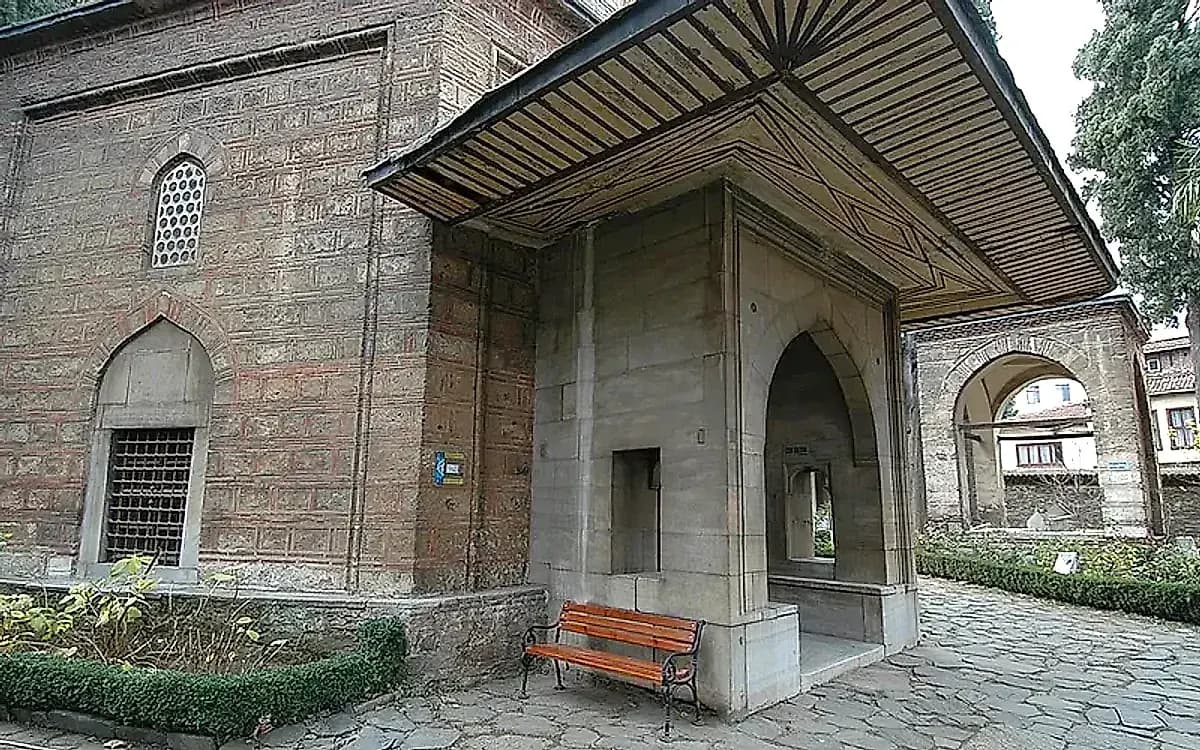
Tomb of Cem Sultan
Set in Osmangazi, Cem Sultan Türbesi offers scenic greenery, peaceful walking tracks, picnic spots, and fresh air for nature enthusiasts.
Hotels Area Ski House
Set in Osmangazi, Oteller Bölgesi Kayak Evi offers scenic greenery, peaceful walking tracks, picnic spots, and fresh air for nature enthusiasts.